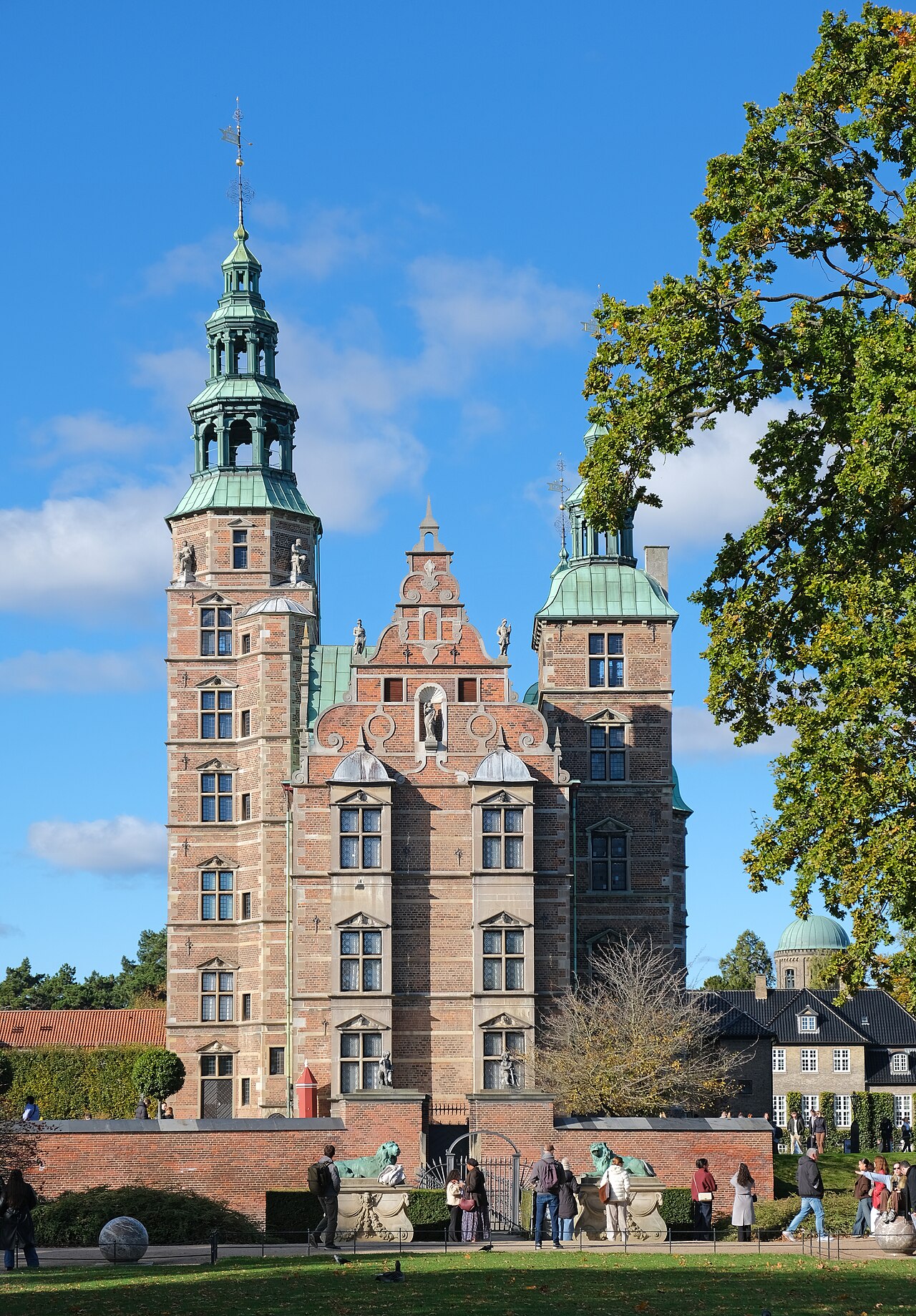
Rosenborg Castle
Rosenborg Slot Treasury of the Danish Crown JewelsIn the green heart of Copenhagen, surrounded by the oldest royal garden in the country, stands Rosenborg — a red-brick castle of turrets, copper spires and Dutch-Renaissance gables. King Christian IV, the most prolific builder ever to wear the Danish crown, raised it in stages between 1606 and 1633 as a private summer house just outside the city ramparts.
Christian IV loved Rosenborg above all his buildings; he died here in 1648, in a modest bedroom that is still preserved. After the introduction of absolute monarchy the castle gradually ceased to be a residence and became something rarer — a strong-room for the memory of a dynasty.
What it is famous for
Rosenborg is best known as the home of the Danish Crown Jewels and the royal regalia, kept in the secure basement Treasury. Here are the crowns of the absolute kings, the anointing sword, the ivory-and-gold throne guarded by three life-size silver lions, and the jewellery sets still worn by the Queen on great occasions.
Above the treasury, more than twenty rooms run in an unbroken sequence from Christian IV to the 19th century — the Knights' Hall with its coronation thrones and silver furniture, the Marble Hall, and intimate chambers panelled, painted and hung with the personal possessions of generations of monarchs.
Good to know
Rosenborg sits in Kongens Have (the King's Garden), a public park that is free to enter and a favourite spot for picnics in summer. The castle is a few minutes' walk from Nørreport, the busiest station in Copenhagen, with trains, metro and buses. It is run by the same institution as Amalienborg, the Royal Danish Collection.